In 1966, the Capablanca Memorial in Havana was one of the strongest tournaments of the year. Bobby Fischer was invited — but the US State Department denied him travel to Cuba. This was the Cold War, and Cuba was enemy territory. Fischer's solution? He played all of his games by telex from the Marshall Chess Club in New York City, with a live operator relaying moves between the two venues. Every move had to be transmitted, received, and relayed back. There was no instant communication, no video calls, no engine assistance.
And yet Fischer played with the precision of a computer.
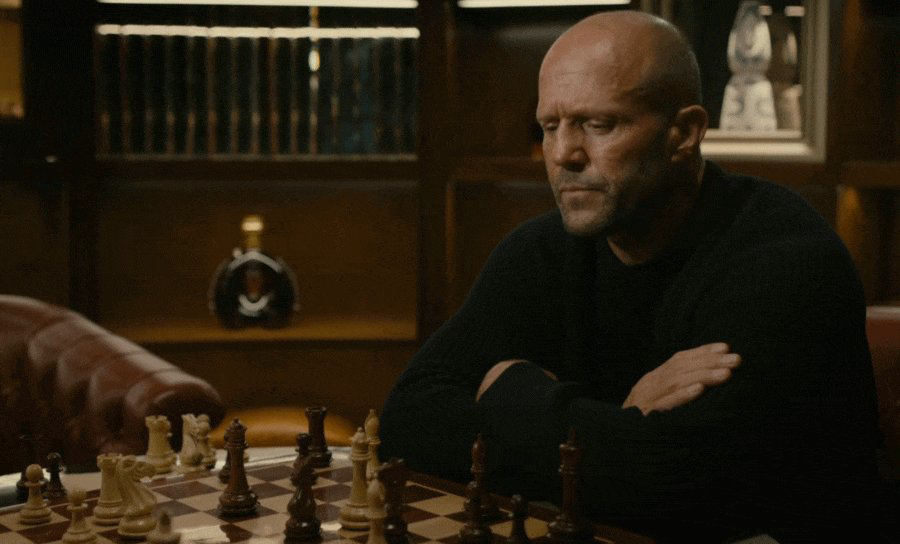
This is one of those games: Georgi Tringov, a strong Bulgarian Grandmaster, launches a bold piece sacrifice against Fischer's Sicilian Najdorf. For a moment, it looks terrifying. Then Fischer dismantles it with surgical precision.
The Game
Georgi Tringov vs Bobby Fischer Capablanca Memorial, Havana 1966 Sicilian Defense, Najdorf Variation
The Opening: Najdorf Territory
The Najdorf was Fischer's home turf. He had played it hundreds of times and understood its nuances better than almost anyone alive. After 1.e4 c5 2.Nf3 d6 3.d4 cxd4 4.Nxd4 Nf6 5.Nc3 a6, we're in one of the most theoretically dense positions in all of chess.
Tringov chooses 6.Bg5 — the aggressive line that was popular in the 1960s, favored by players who wanted to create immediate complications. It's a direct challenge: "I'm coming for you."
6...e6 7.f4 — White signals aggressive intentions. The pawn on f4 supports a future e5 push and opens lines toward the black king. This is not a quiet positional game.
7...Qb6 — Fischer's trademark. The queen targets b2 and puts pressure on White's center. This is the old main line, and Fischer knew it inside out.
The Sacrifice: Tringov Goes All In
8.Qd2 Qxb2 — Fischer takes the pawn. He knows exactly what's coming.
9.Rb1 Qa3 — The queen retreats to a3, but White has a free hand in the center.
10.e5 — The sacrifice. Tringov pushes e5, offering a piece to rip open the center. This is the critical moment of the game. The idea is that after 10...dxe5 11.fxe5 Nfd7, White has enormous pressure: the bishop on g5 pins the knight, the pawn on e5 controls key squares, and the rook on b3 can swing to the kingside.
But is it sound? That's the question Fischer had to answer — by telex, from 2,000 kilometers away.
The position is objectively balanced, but White's initiative is terrifying. The knight on d7 is pinned, the pawn on e5 restricts Black's pieces, and White can play Bc4 with devastating pressure on f7.
The Counterattack: Fischer's Defense
12.Bc4 Bb4 — Fischer doesn't just defend — he counterattacks. The bishop on b4 pins the knight on c3 and creates threats of his own.
13.Rb3 Qa5 — The queen stays active, eyeing both the kingside and the center.
14.O-O O-O — Both sides castle. Fischer has survived the most dangerous phase. He has a piece for two pawns, and his position is solid. The white attack is running out of steam.
The Execution: Nxe6
15.Nxe6 fxe6 — Tringov tries to complicate with a knight sacrifice on e6. Fischer accepts.
16.Bxe6+ Kh8 — The king slides to h8. Fischer doesn't panic. The check is answered calmly.
17.Rxf8+ Bxf8 — Another exchange sacrifice by White. Fischer takes with the bishop, keeping his king sheltered.
Your Turn: Refute the Attack
White has just played 18.Qf4. The threat is Qf7 — a crushing invasion that would attack h7, g7, and the rook on f8 simultaneously. If White gets Qf7 in, the position could collapse.
But Fischer had a precise defense. The following moves are a masterclass in cold-blooded calculation. Tringov's attack looks devastating — the queen threatens to invade on f7, the bishops on e6 and g5 control key diagonals, and White appears to have a decisive initiative.
Can you find Fischer's moves? Try to work out the next 5 moves before reading on.
The Solution
18...Nc6! — Fischer develops the knight with tempo, controlling the critical e5 and d4 squares and, most importantly, clearing the path for ...Qc5+. This is the key defensive resource: the queen will swing to c5 with check, buying time and neutralizing White's attack.
19.Qf7 — Tringov goes for the throat. The queen threatens mate on g7 and attacks the rook on f8. It looks devastating.
19...Qc5+! — The key move. Fischer gives check, forcing the king to move and gaining a crucial tempo. This is the move that holds everything together.
20.Kh1 — The only safe square.
20...Nf6! — Fischer brings the second knight into the defense, attacking the bishop on e6 and the pawn on e5 simultaneously. The knights are now working together, controlling the critical squares.
21.Bxc8 — White captures the rook, but it's too late. The attack has fizzled.
21...Nxe5 — Fischer captures the pawn on e5 with the knight, centralizing it and threatening the queen on f7.
22.Qe6 — White tries to keep some threats alive.
22...Neg4! — Fischer's final blow. The knight on e5 jumps to g4, threatening Nf2+ and Nh2+ with devastating discovered attacks. White's position is hopeless.
0-1 — Tringov resigned.
The Full Game
About the Players
Georgi Tringov (1937–2000) was a Bulgarian Grandmaster and one of the strongest players in Eastern Europe during the 1960s. He represented Bulgaria in multiple Chess Olympiads and was known for his aggressive, uncompromising style.
Bobby Fischer (1943–2008) needs no introduction. The 11th World Chess Champion is widely considered one of the greatest players of all time. His refusal to compromise — on the board or off it — defined his career. Playing by telex from New York while the tournament was in Havana is pure Fischer: he wanted to play, so he found a way.